Between ages 18 months and 3 years, it is 100% normal for toddlers to engage in "parallel play"—sitting side by side on the rug playing with the same toys while barely speaking to each other! Instead of forcing them to "Share nicely!", you can bridge parallel play into social talking by giving both kids a shared action goal and modeling short 2-word peer scripts like "Here, block!", "My turn!", and "Look, car!" Kid Speech AI: Play & Learn ($9.99/mo or $79.99/yr with a 7-day free trial on Google Play) lets playdate buddies take turns scanning toys and jumping together in 3D AR Exercise!
Why "Give It to Your Friend!" Backfires—And What Works Instead
When a toddler is holding a favorite dump truck and an adult says, "Give the truck to Leo!", their brain hears a threat: "You are losing your toy!" That triggers grabbing, hiding, or crying instead of talking. When you shift the focus to a joint project—like loading blocks into the back of the dump truck together or taking 2-second camera scans—both children have a fun reason to look at each other and use social words!
3 Playdate & Sibling Games That Spark Peer-to-Peer Words
- The "Two-Kid Toy Scanner" Team Game: Sit on the rug with two kids and a basket of toys. Give Child A the job of holding up a toy while Child B aims Live Camera Object Naming in Kid Speech AI for 2 seconds until it speaks the word out loud—then switch jobs: "Maya holds the cup... Leo scans! Now switch!"
- Model "Trade!" Instead of "Give It Up": Teach your child the magic playdate word "Trade!" Hold out a second exciting toy and model the exact words they can say to a peer or sibling: "Want to trade? Here’s a ball—my turn truck!"
- Side-by-Side 3D AR Exercise Jumping Party: Open 3D AR Exercise or Real-Time Action Narration so two kids can jump, clap, and wave side by side without having to fight over a single physical toy!
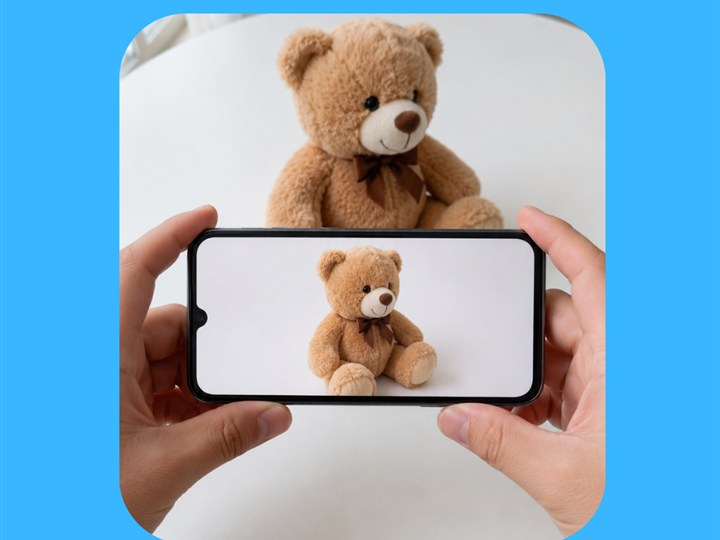
Real-Time Action Narration lets siblings and playdate friends jump, wave, and clap together without fighting over toys.
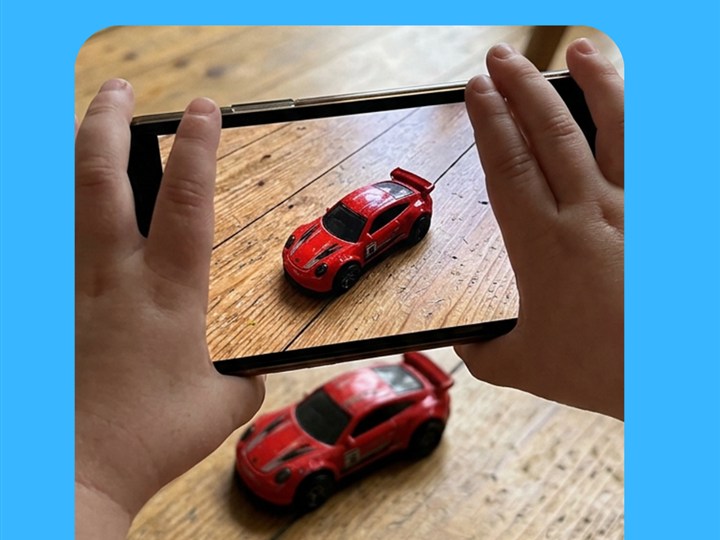
One child holds up the toy while the other scans it for 2 seconds with Live Camera Object Naming!
At-Home Vocabulary & Routine Comparison Guide
| Playdate Situation | What Toddlers Usually Do | Short Peer Phrase to Model Out Loud |
|---|---|---|
| Both kids want the same block | Tug-of-war or crying | "Trade please!", "My turn, then your turn!" |
| Playing silently side by side | Watching each other quietly | "Look! Big tower!", "Put one on top!" |
| One child knocks a toy down | Pointing or yelling | "Uh-oh! Crash!", "Help me fix it!" |
| Saying hello or goodbye at the door | Hiding behind a parent's leg | Wave hand + "Hi Leo!", "Bye-bye, see you soon!" |
Frequently Asked Questions for Parents
At what age do kids switch from parallel play to real cooperative play?
Parallel play peaks between 18 and 30 months. Around age 2.5 to 3.5, children begin associative and cooperative play—building one shared structure, trading roles, and talking back and forth!
What if my toddler only talks to adults at the park and ignores other kids?
Adults are predictable conversation partners who understand unclear toddler speech! Start by playing a 3-way game (you + your child + one peer) where you act as the friendly "sportscaster" translating between the two kids.
How can Custom Family Flashcards prepare my child for a playdate or preschool?
Snap a photo of a playdate friend or cousin in Custom Family Flashcards so your toddler can practice saying their friend's name before they arrive!
Turn Everyday Play & Screen Time Into Real Words!
Try all 6 interactive vocabulary modes free for 7 days on Google Play ($9.99/mo or $79.99/yr after—cancel anytime in one tap).
▶ Start 7-Day Free Trial on Google Play