Before a toddler says their first words, they master 'Joint Attention'—the magical 3-point triangle where your child looks at an exciting toy, looks up at YOUR eyes to see if you noticed too, and looks back at the toy! That shared moment of connection is where 90% of early word learning happens. You can build rich joint attention every day by holding objects near your eyes, playing surprise sound games, and sharing 2-second scans in Kid Speech AI: Play & Learn ($9.99/mo or $79.99/yr with a 7-day free trial on Google Play)!
What Is the 'Joint Attention Triangle' and Why Does It Unlock Speech?
If a toddler is staring down at a toy truck on the floor while you sit behind them on the couch saying "Truck!", they don't see your eyes, your smile, or your lips moving. Joint Attention happens when you get down on your belly at eye level so your face and the toy are in the exact same field of view. The instant your toddler looks from the truck to your face and back ("Did you see that crash, Mama?!"), any word you model sticks immediately!
3 Eye-Level Joint Attention Games That Spark Shared Smiles & Words
- 1. The 'Hold the Toy Right Next to Your Cheek' Rule: Whenever your toddler reaches for a ball, snack, or bubble wand, bring it right up next to your own eyes and lips for 2 seconds before handing it over: "Ball! Bounce ball!" Now they see the toy, your eyes, and your mouth at once!
- 2. The 'Silly Hat / Toy on My Head' Surprise: Place a soft block or stuffed animal on top of your own head, pretend to balance it, and say: "1, 2, 3... Ah-choo!" so it tumbles into your lap! Toddlers immediately lock eyes with your face waiting for the next sneeze—and start shouting "Up!" or "Choo!"
- 3. Co-Viewing 2-Second Camera Scans & Custom Family Cards in Kid Speech AI: Sit shoulder-to-shoulder with your child and aim Live Camera Object Naming at a favorite toy together, or flip through Custom Family Photo Cards of Mom, Dad, and pets—pointing at the screen and looking at each other with big smiles!

Flip through Custom Family Photo & Video Cards together—toddlers love looking up at you when Mama, Dada, or the family dog pops up!
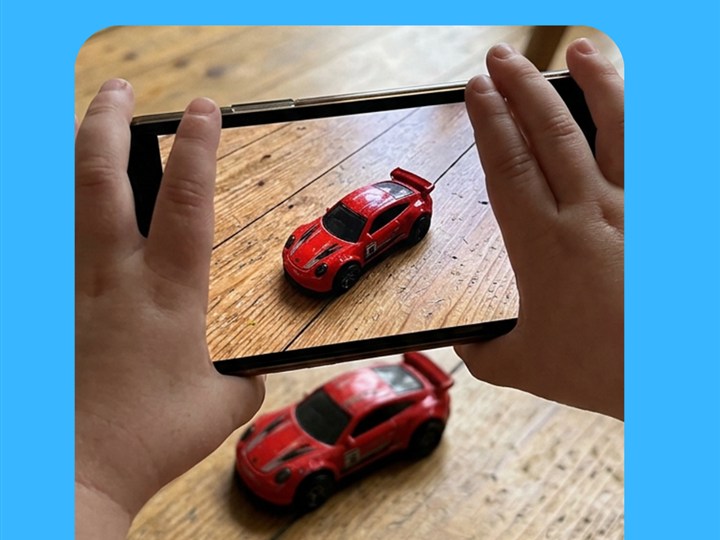
Turn phone time into a shared 2-person game by scanning real household objects side by side.
At-Home Vocabulary & Routine Comparison Guide
| Play Situation | Solo Play (Low Joint Attention) | Shared Triangle Upgrade (High Joint Attention!) |
|---|---|---|
| Rolling a Car | Parent sits on couch behind toddler | Lie on rug face-to-face and roll car back & forth |
| Handing Over a Snack | Put bowl on table and walk away | Hold berry near your cheek: "Berry! Eat berry!" |
| Blowing Bubbles | Blow bubbles non-stop automatically | Blow 1 bubble, cap wand, and wait for eye contact |
| Using Kid Speech AI | Child watches passively alone | Scan 3 real toys together & celebrate each word! |
Frequently Asked Questions for Parents
What if my toddler is so focused on spinning wheels or lining up blocks that they don't look up at me?
Don't take their toys away—join their exact game! Grab your own car or block, place it right next to theirs in their line of sight, and make a fun sound effect ('Beep-beep! Block on!'). When you join their interest, they naturally look up to include you.
At what age does joint attention develop?
Babies begin following an adult's point and sharing smiles over toys between 9 and 14 months, and use pointing + eye-gaze shifting ('Look at that doggy!') to share excitement throughout ages 1 to 3.
Does pointing count as joint attention?
Yes! When a toddler points at an airplane in the sky and looks back at you to make sure you see it too, that 'declarative pointing' is one of the strongest predictors of upcoming spoken words.
Turn Everyday Play & Screen Time Into Real Words!
Try all 6 interactive vocabulary modes free for 7 days on Google Play ($9.99/mo or $79.99/yr after—cancel anytime in one tap).
▶ Start 7-Day Free Trial on Google Play