If your toddler points at a cat, a cow, a squirrel, and a bear and proudly shouts "Doggy!" for all of them, don't worry—they aren't confused! Speech-language pathologists call this "overextension," and it is a super smart stage of early brain development where a child uses one known word to cover a whole category of similar things (four legs + fur = "Dog!"). Kid Speech AI: Play & Learn ($9.99/mo or $79.99/yr with a 7-day free trial on Google Play) helps toddlers learn exact object names using 2-second Live Camera Object Naming and 3-angle real studio photos.
Why Overextension Means Your Toddler Is Building Categories
When a 20-month-old calls an orange, a balloon, and the moon "Ball!", their brain has just figured out the concept of roundness! They know the object is round like a ball, they just don't have the specific words "orange" or "moon" in their spoken bank yet. Instead of saying "No, that’s not a ball!" (which can make kids hesitant to guess), you can validate their smart connection and hand them the new specific word!
3 Gentle Ways to Turn One Category Word Into 10 Specific Words
- Use the "Yes, Similar—AND New Name!" Formula: When your child points to a cat and says "Dog!", smile and validate the similarity before modeling the new word: "It has four legs like a dog—and this one is a CAT! Meow, soft cat!"
- Compare Two Real Objects Side-by-Side With 2-Second Scans: Put an apple and an orange (or a toy car and a toy fire truck) next to each other on the table. Let your child scan the first one for 2 seconds with Live Camera Object Naming ("Car!"), then scan the second one ("Fire truck!") so they hear both exact labels side by side.
- Explore 3-Angle Real Studio Photos in Pop-Up Image Flashcards: Flip through Pop-Up Image Flashcards in Kid Speech AI together. Seeing photorealistic studio images of a dog, a cat, a rabbit, a horse, and a cow from Front, Side, and 3/4 angles helps toddlers spot the unique features (horns, long ears, bushy tail) that separate each word!

3-angle real studio photos help toddlers notice the exact details that distinguish a dog, cat, cow, and horse.
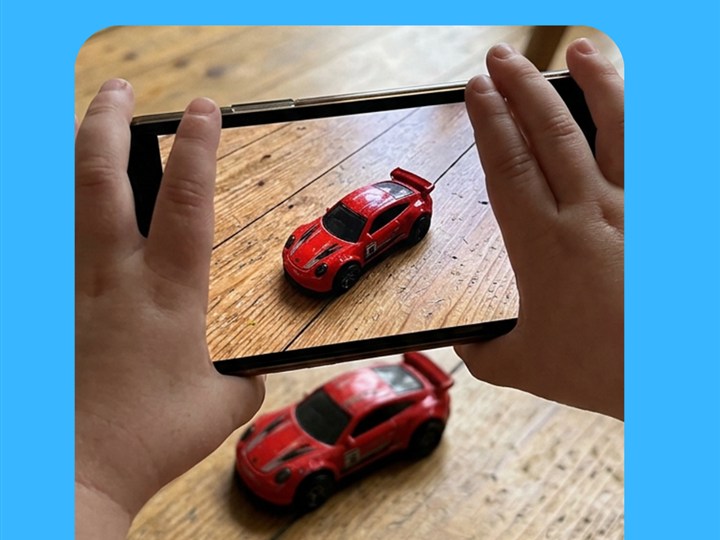
Hold the camera steady for 2 seconds on any toy, fruit, or vehicle to hear its exact name across 27 voices!
At-Home Vocabulary & Routine Comparison Guide
| What Your Toddler Says | The Smart Feature They Noticed | What to Say Back Warmly |
|---|---|---|
| Calls a cat or horse "Dog!" | Four legs, fur, tail, animal | "Yes, four legs! This one says meow—it's a CAT!" |
| Calls an orange or tomato "Ball!" | Round shape that rolls | "Round like a ball! We eat this one—it's an ORANGE!" |
| Calls a truck, bus, or train "Car!" | Wheels that roll and go fast | "Look at the big wheels! That's a yellow SCHOOL BUS!" |
| Calls every adult man "Dada!" | Tall adult with a deep voice | "He has glasses like Dada! That's Grandpa!" |
Frequently Asked Questions for Parents
At what age do toddlers usually outgrow calling everything by one word?
Overextension is most common between 14 and 26 months (when a child has under 75 spoken words) and naturally fades between ages 2 and 3 as their specific noun vocabulary expands!
Why shouldn't I say "No, that's wrong, it's a cow"?
Saying "No, wrong!" makes cautious toddlers feel like talking is a test they failed. Highlighting what makes the new object special ("Ooh, this one has black spots and says MOO—it's a COW!") keeps them talking confidently.
Does my child already know the difference even if they use the same word?
Almost always yes! If you put a toy dog and a toy cow on the floor and ask "Where's the cow?", your toddler will usually point right to the cow—even if they still call both "Dog" because "Dog" is easier for their mouth to say.
Turn Everyday Play & Screen Time Into Real Words!
Try all 6 interactive vocabulary modes free for 7 days on Google Play ($9.99/mo or $79.99/yr after—cancel anytime in one tap).
▶ Start 7-Day Free Trial on Google Play