Some toddlers understand everything around them, yet when they try to say a two-syllable word like "Baby," "Puppy," or "Water," their lips and jaw seem to get stuck moving from the first syllable to the second! Speech therapists call this motor-planning or syllable-transition practice. Kid Speech AI: Play & Learn ($9.99/mo or $79.99/yr with a 7-day free trial on Google Play) combines 2-second Live Camera Object Naming and 27 clear voices with fun, repeatable daily word routines.
Why Watching Your Mouth Helps Toddlers Plan Smooth Words
Speaking requires the brain to coordinate tiny, split-second movements of the jaw, lips, and tongue. When a toddler only hears a word while looking down at the floor, they don't see how you made the sound! When you hold a favorite toy right beside your cheek—or sit side-by-side in front of a mirror—and stretch the transition smoothly ("Baaa-by!", "Puuu-ppy!", "Maaa-ma!"), your child’s brain maps the visual mouth movement directly onto the sound.
3 Visual Mouth-Cue & Syllable-Transition Games
- The Cheek-Level "Say It Together" Trick: Before handing over a scanned object from Live Camera Object Naming, hold the real object right next to your mouth and invite your child to say it with you at the exact same time in a slow, bouncy rhythm: "Ready, together... Baaa-ll!" Saying a word simultaneously takes away the pressure of performing solo.
- Two-Tap Syllable Bouncing ("Pu-Ppy! Ba-Nana!"): Tap two blocks on the floor or tap your child’s knees in rhythm as you connect syllables smoothly without choppy gaps: "Ma-ma!", "Ba-by!", "Wa-ter!", "Bub-ble!"
- Hallway Mirror Silly Faces & Lip Pops: Sit in front of a bathroom or hallway mirror with Pop-Up Image Flashcards. Practice rounding lips for "Oooo!", smiling wide for "Eeee!", and pressing lips together for "Mmm-milk!" and "P-p-pop!"
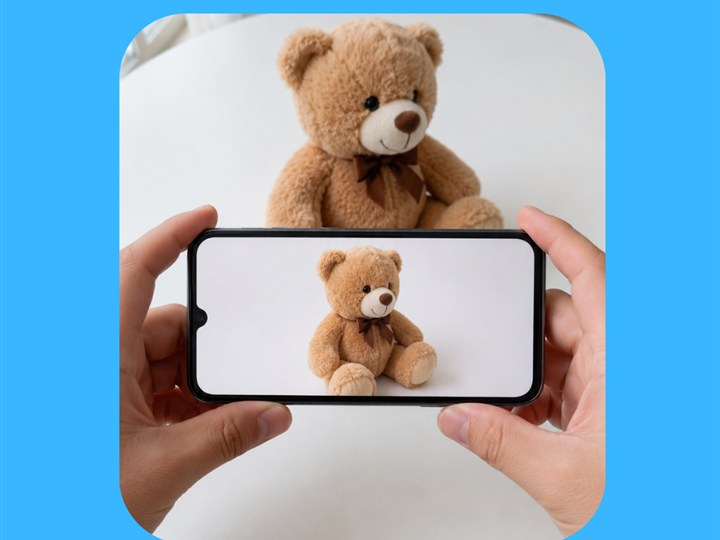
Pair rhythmic body taps and face-to-face mouth cues with Real-Time Action Narration.

Record close-up, smiling family clips in Custom Video Flashcards so your child can watch and practice favorite words!
At-Home Vocabulary & Routine Comparison Guide
| Syllable Shape | Easy Practice Words | Visual Mouth Cue to Show Your Child |
|---|---|---|
| Repeated Syllables (CVCV) | "Mama", "Dada", "Baba", "Nana" | Point to your lips closing twice: "Mmm-ah, mmm-ah!" |
| Lip-to-Vowel Transitions | "Baby", "Puppy", "Bubble", "More" | Hold the toy right beside your cheek so they watch your lips |
| Round-to-Smile Vowels | "Whoa!", "We!", "Toy", "Boy" | Exaggerate a round "O" mouth sliding into a big smile |
| Two-Word Smooth Bridges | "My ball", "Go up", "More milk" | Slide your finger smoothly across the table to link both words |
Frequently Asked Questions for Parents
Why is saying a word AT THE SAME TIME as my toddler (choral speech) so helpful?
In motor-speech therapy (such as Dynamic Temporal and Tactile Cueing), saying a word together at a slightly slower, musical pace gives your child a live auditory and visual guide so their mouth doesn't have to guess what comes next!
Should I break words into choppy robot pieces ("Buh... Ah... Guh")?
Avoid choppy pauses between sounds! Instead, keep your voice connected and stretchy ("Baaaag", "Muuug", "Puuu-ppy") so your child learns to glide smoothly from one sound into the next.
How can we use Custom Video Flashcards in Kid Speech AI for mouth-cue practice?
Record a 3-second video showing the toy right next to your smiling mouth as you say the word clearly—your child will love replaying their own parent's face and voice!
Turn Everyday Play & Screen Time Into Real Words!
Try all 6 interactive vocabulary modes free for 7 days on Google Play ($9.99/mo or $79.99/yr after—cancel anytime in one tap).
▶ Start 7-Day Free Trial on Google Play