Spatial location words—like "Behind the couch," "Next to your shoes," "Under the pillow," and "Between the trucks"—are essential building blocks for preschool comprehension and 4-to-5-word sentences! Kid Speech AI: Play & Learn ($9.99/mo or $79.99/yr with a 7-day free trial on Google Play) turns living-room toy hunts into an interactive 2-second camera discovery game.
Why Location Words Unlock Longer Sentences & Preschool Readiness
Every day in preschool and at home, children hear directions packed with spatial words: "Line up behind Leo," "Put your water bottle next to your backpack," or "Look under the table." When kids only know "in" and "on," they often look confused or grab the wrong item. Teaching location words through whole-body hide-and-seek makes spatial grammar click effortlessly!
3 Living-Room Toy Hide-and-Seek Games
- The Couch Cushion Mystery Hunt: Hide a favorite toy car or dinosaur behind a pillow, under a blanket, or next to a shoe so a tiny piece is still peeking out. When your child finds it, celebrate: "You found it! Behind the pillow!" and scan the toy for 2 seconds with Live Camera Object Naming.
- Whole-Body Obstacle Course: Use your child’s own body first! Call out playful moves: "Stand behind the chair! Sit under the table! Jump next to Mama!"
- The "Between" Parking Lot: Line up two toy trucks with a gap in the middle and hand your child a third car: "Park the red car between the trucks—right in the middle!"
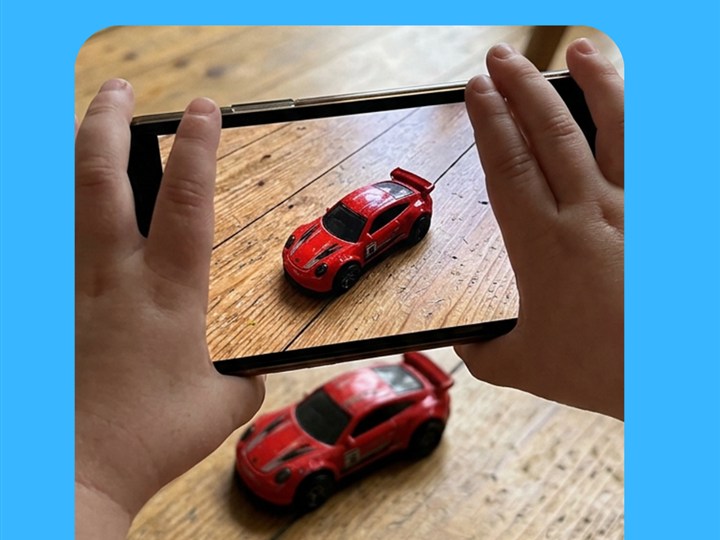
Find hidden toys behind pillows or under chairs and scan them for 2 seconds to celebrate!
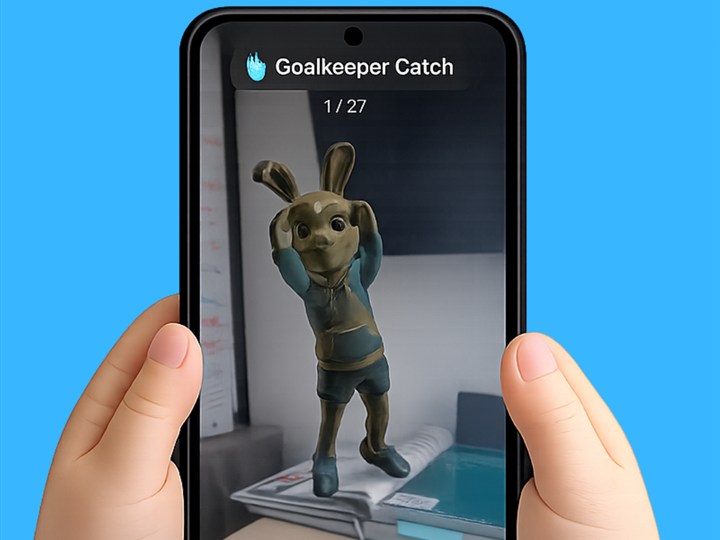
Combine 3D AR Exercise with whole-body movement cues like step forward, jump up, and stand next to.
At-Home Vocabulary & Routine Comparison Guide
| Spatial Word Stage | Target Location Words | Playful Hide-and-Seek Clues to Model |
|---|---|---|
| Stage 1 (Ages 18–26 Mos) | In, On, Under, Out | "Ball is UNDER the chair!", "Take block OUT of box" |
| Stage 2 (Ages 2.5–3.5 Yrs) | Behind, In front of, Next to / Beside | "Look BEHIND the curtain!", "Park car NEXT TO bus" |
| Stage 3 (Ages 3.5–5 Yrs) | Between, Middle, Top, Bottom, Around | "Bear is BETWEEN the pillows!", "Top shelf" |
| Stage 4 (Ages 5–7 Yrs) | Left, Right, Across from, Through | "Crawl THROUGH the tunnel!", "Shoe on your LEFT foot" |
Frequently Asked Questions for Parents
Why should I start with my child's own body before using small toys?
Toddlers understand space through their own body first! Crawling UNDER a table or hiding BEHIND a door lets them physically feel what the word means before applying it to two small toys.
How does the 2-second Live Camera Object Naming mode fit into hide-and-seek?
Searching with the camera like a "Word Detective" makes kids slow down, look closely at where the object is sitting, hold steady for 2 seconds, and hear the reward word spoken across 27 cheerful voices.
What if my child just points and says "There!" instead of "Behind the chair"?
Expand their 1-word answer warmly! When they point and say "There!", smile and reply: "Yes, right there—BEHIND the chair! Ball is BEHIND the chair!"
Turn Everyday Play & Screen Time Into Real Words!
Try all 6 interactive vocabulary modes free for 7 days on Google Play ($9.99/mo or $79.99/yr after—cancel anytime in one tap).
▶ Start 7-Day Free Trial on Google Play