Children ages 2 to 7 often confuse colors like blue, green, and yellow when quizzed on flat paper cards because abstract attributes are hard to separate from the object itself. Kid Speech AI: Play & Learn ($9.99/mo or $79.99/yr with a 7-day free trial on Google Play) makes colors and shapes click by pairing real-world household scavenger hunts with 2-second Live Camera Object Naming and multi-angle Pop-Up Flashcards.
The "Noun First, Color Second" Secret Used by Educators
Here is a fascinating quirk of how young brains wire language: if you point to a red ball and say "Look, a red ball!", a toddler's brain focuses on the first descriptive word (red) and forgets what it attaches to. But if you say "Look, a ball! The ball is red!"—or compare two identical objects that differ only by color ("Blue sock, yellow sock!")—the color word locks in immediately.
3 Real-House Color & Shape Scavenger Hunts
- The "One Color Basket" Hunt: Grab a laundry basket and declare "Today is Yellow Day!" Walk around the living room with Live Camera Object Naming scanning a banana, a yellow block, and a yellow lemon while saying "Banana—yellow! Block—yellow!"
- Kitchen Shape Detective: Point your phone camera at real kitchen items—a round plate (circle), a cracker box (rectangle), and a sandwich slice (triangle)—tracing the edge with your finger right after the app names the item.
- Screen-Time Color Callout: Turn on Pop-Up Image & Video Flashcards during your child's daily cartoon time; whenever a flashcard pops up, celebrate both the object name and its color together!
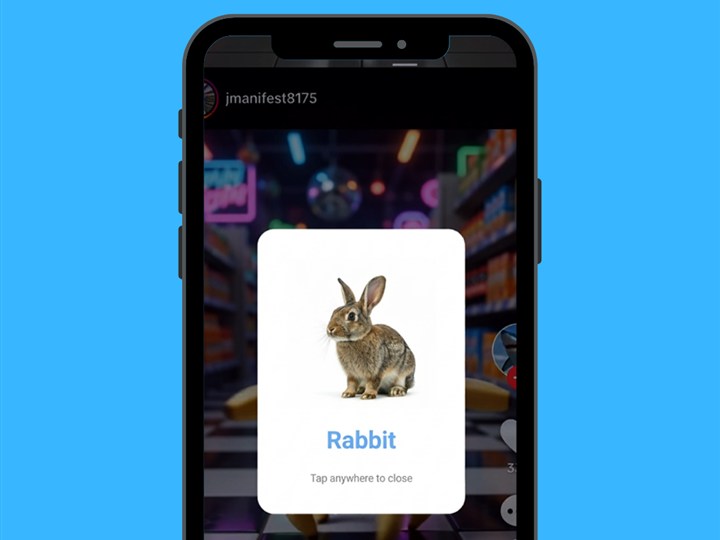
Scheduled Pop-Up Image Flashcards reinforce real-world object names and vibrant colors during screen time.
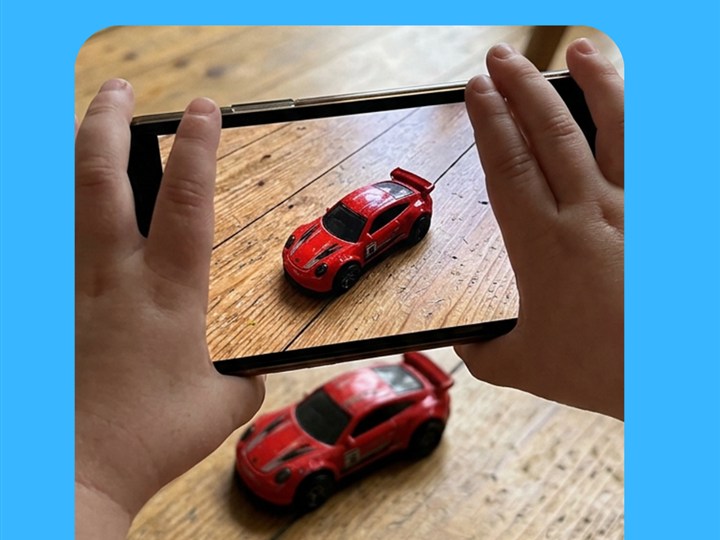
Scan real toys, fruit, and clothing around your room to connect color words to tangible 3D objects.
At-Home Vocabulary & Routine Comparison Guide
| Target Concept | Flat Quiz Drill (Low Retention) | 3D Scavenger Hunt + Kid Speech AI (High Retention) |
|---|---|---|
| Primary Colors (Red, Blue, Yellow) | Asking "What color is this?" on a blank card | Comparing two real cups: "Cup! Blue cup vs. Red cup!" |
| Circles & Squares | Pointing to a 2D worksheet | Scanning a round plate and square book with Live Camera AI |
| Size + Color Combos | Memorizing rote lists | Sorting laundry together: "Big green shirt, little white sock!" |
| Generalization across rooms | Only recognizes the one picture in a book | Seeing objects from multiple real-world angles + 27 voices |
Frequently Asked Questions for Parents
At what age should a child know basic colors and shapes?
Many children begin matching colors around 24 months and naming 3 to 4 core colors and basic shapes (circle, square, star) between ages 2.5 and 3.5. Using real household toys accelerates color naming without quiz pressure.
Why does saying "The car is blue" work better than "Blue car" at first?
Naming the object noun first ("Car!") anchors your child's visual attention on the whole toy before asking their brain to isolate a single visual property ("...is blue!").
Can I track which color and shape words my child has practiced?
Yes! The built-in On-Device Parent Word Log automatically records every practiced word and category privately on your phone.
Turn Everyday Play & Screen Time Into Real Words!
Try all 6 interactive vocabulary modes free for 7 days on Google Play ($9.99/mo or $79.99/yr after—cancel anytime in one tap).
▶ Start 7-Day Free Trial on Google Play