Most toddler and early-childhood meltdowns happen when a child feels tired, hungry, or stuck on a toy and lacks the spoken words to explain it. Kid Speech AI: Play & Learn ($9.99/mo or $79.99/yr with a 7-day free trial on Google Play) lets you turn real family selfies into "Feeling Faces" flashcards and use Real-Time Action Narration to model emotion and self-regulation words during calm play.
Why Kids Learn Emotion Words Best When They Are Already Calm
When a 2- or 4-year-old is already crying on the kitchen floor, their brain is in fight-or-flight mode—meaning they cannot absorb a new vocabulary lesson like "Use your words!" Instead, children learn feeling words during happy, low-stakes games when you act out silly faces and body states together.
3 Fun Games to Build Emotional Vocabulary at Home
- The Silly Family "Feeling Faces" Deck: Snap 5 quick photos of Mom, Dad, or siblings making exaggerated expressions—big smile ("Happy"), yawning ("Sleepy"), rubbing tummy ("Hungry"), hands on cheeks ("Surprised"), and arms crossed ("Frustrated")—and save them in Custom Family Photo Cards.
- Pair Every Feeling With an Action Solution: When practicing a feeling word, always model the matching action phrase: "Thirsty → Drink water", "Tired → Hug pillow", "Stuck → Help please!"
- 3D AR Movement Reset: When energy starts running high indoors, launch 3D AR Exercise for a 2-minute stretch and jump break while naming positive body words ("Strong!", "Jumping!", "Deep breath!").

Custom Family "Feeling Faces" Cards: Real family expressions beat flat cartoon emojis every time.
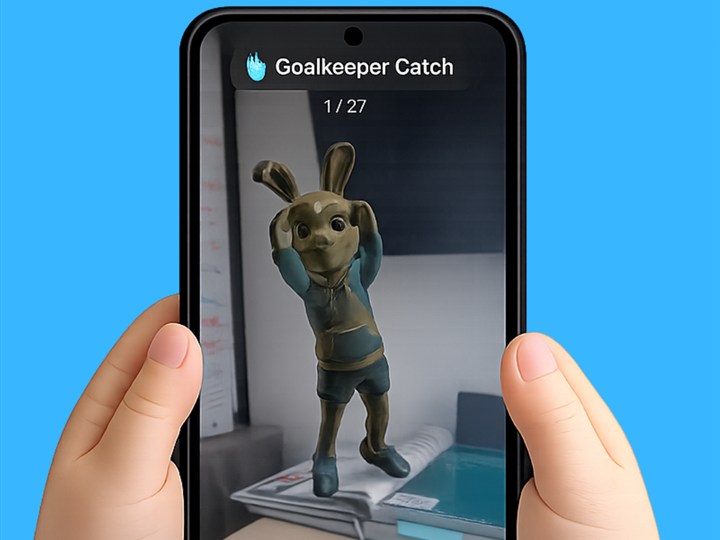
3D AR Movement Breaks: Channel big indoor energy into joyful movement and action words.
Emotion & Body-State Word Bridge for Ages 2 to 7
| What the Child Feels | First Feeling Word | Paired Solution Phrase to Model |
|---|---|---|
| Toy won't open or fit | "Stuck!" / "Mad" | "It's stuck! Help please!" |
| Rubbing eyes before nap | "Tired" / "Sleepy" | "I am sleepy. Night-night blanket." |
| Pointing at kitchen counter | "Hungry" / "Thirsty" | "Hungry tummy! Want banana." |
Frequently Asked Questions
When should I teach my child feeling and emotion words?
Always practice emotion and body-state words ("Happy", "Sleepy", "Hungry", "Mad", "Help please") during calm, playful moments—never in the middle of an active meltdown when a child's brain cannot process new vocabulary.
Why do real family face photos teach emotions better than cartoon emojis?
Young children ages 2 to 7 read real human eyes and mouths far more accurately than flat yellow cartoon circles. Seeing Mom, Dad, or themselves making silly "Happy", "Surprised", and "Sleepy" faces in Custom Flashcards makes emotion words click immediately.
How much does Kid Speech AI cost to build custom emotion and action decks?
Kid Speech AI: Play & Learn is $9.99/month or $79.99/year on Google Play and starts with a 7-day free trial giving full access to Custom Photo & Video Cards, 27 voices, and Real-Time Action Narration.